When we think about mental health, behavior, digestion, fatigue, or neurological symptoms, mitochondria may not be the first thing that comes to mind.
But perhaps they should be part of the conversation.
Mitochondria are tiny structures located inside nearly every cell in the body. They are often described as the “powerhouses of the cell” because one of their primary responsibilities is producing ATP—the usable energy our cells need to function.
Your brain needs energy.
Your intestinal lining needs energy.
Your immune system needs energy.
Your muscles need energy.
Your cells need energy to repair, communicate, regulate inflammation, maintain appropriate function, and respond to stress.
This is why mitochondrial health is an important piece of the whole-body picture.
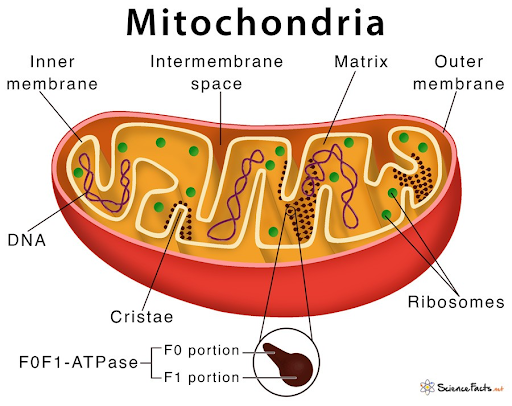
Although ATP production is their best-known function, mitochondria are involved in much more than simply “making energy.”
They participate in:
When mitochondrial function is impaired, the effects can potentially reach far beyond feeling physically tired.
This is particularly important when we begin looking at organs with high energy demands—especially the brain.
The brain is an incredibly energy-demanding organ.
Neurons require a continuous supply of energy to maintain electrical activity, communicate with one another, regulate neurotransmission, and support normal brain function.
Researchers are increasingly investigating mitochondrial dysfunction in connection with neurological, neurodevelopmental, and psychiatric conditions.
Mitochondrial abnormalities have been studied in relation to conditions including:
This does not mean mitochondrial dysfunction causes every case of autism, ADHD, depression, anxiety, or another neurological condition.
These conditions are complex and multifactorial.
Instead, mitochondrial function represents one biological pathway that may be worth considering in selected individuals—particularly when symptoms suggest a broader metabolic or cellular-energy component.
Mental health is often discussed primarily in terms of serotonin, dopamine, norepinephrine, and other neurotransmitters.
Those systems are important—but the biology of mental health extends much further.
The brain requires enormous amounts of cellular energy to function appropriately.
Research into depression, for example, has identified associations involving mitochondrial energy metabolism, oxidative stress, inflammation, the gut microbiome, and other metabolic processes.
This has helped expand our understanding of mental health from a purely neurotransmitter-focused model toward a much more interconnected picture.
At Whole Brain Holistic Care, this is why I believe it can be valuable to ask:
What else could be contributing to the symptoms we are seeing?
The relationship becomes even more interesting when we look at the gut.
The cells lining the intestine contain mitochondria that help provide the energy necessary to maintain intestinal function and tissue homeostasis.
Research has increasingly identified communication between the gut microbiome and mitochondria.
The microbiome produces metabolites and nutrients that can influence mitochondrial function. At the same time, mitochondrial metabolism within intestinal cells can influence the intestinal environment and potentially affect the microbiome.
In other words, this relationship appears to be bidirectional.
This emerging area of research is sometimes described as mitochondria–microbiome crosstalk.
Now we can begin connecting the pieces:
Gut → Microbiome → Metabolites & Nutrients → Mitochondria → Cellular Energy → Brain
But communication also occurs in the other direction.
This is part of the larger microbiota–gut–brain axis.
Research suggests microbial metabolites can interact with mitochondrial processes involving energy production, oxidative stress, calcium regulation and cellular quality-control mechanisms.
This is one reason I do not like looking at the brain, gut, immune system, and metabolism as completely separate systems.
They communicate continuously.
Mitochondrial function can be influenced by many factors, including genetics and primary mitochondrial disorders, but mitochondrial health can also interact with:
This does not mean that finding one of these factors proves it caused mitochondrial dysfunction. It means that mitochondrial health should be considered within the context of the entire clinical picture.
And that brings us to testing.
Traditionally, evaluating mitochondrial respiratory-chain function could involve much more invasive testing, including muscle biopsy in appropriate clinical circumstances.
MitoSwab™ provides a non-invasive way to assess aspects of mitochondrial function using cells collected from inside the cheek.
Instead of a blood draw or muscle biopsy, a buccal swab is gently rubbed against the inside of the cheek.
The laboratory then evaluates components of the mitochondrial Electron Transport Chain (ETC) and measures citrate synthase activity, which can provide information related to mitochondrial content.
MitoSwab™ reports that its testing has demonstrated an 84% correlation with muscle-biopsy findings.
Importantly, MitoSwab™ is a functional test—not a mitochondrial DNA or genetic test.
Think of the Electron Transport Chain as part of the machinery mitochondria use to convert energy from nutrients into ATP.
MitoSwab™ evaluates activity involving mitochondrial respiratory-chain complexes.
When abnormalities are identified, the results can provide another piece of information about how effectively cellular energy pathways are functioning.
The goal isn’t simply to label someone as having “bad mitochondria.”
The goal is to ask a better question:
Could cellular energy production be one piece of this person’s larger clinical picture?
Mitochondrial testing is not necessary for everyone.
However, depending on an individual’s medical history and symptoms, a clinician may consider mitochondrial evaluation when there are complex or unexplained concerns involving multiple systems.
Examples might include combinations of:
Symptoms alone cannot diagnose mitochondrial dysfunction. They can, however, help determine whether further medical evaluation is appropriate.
One of the most important principles in functional and integrative care is that a laboratory result should never be interpreted in isolation.
A mitochondrial test should be considered alongside:
Sometimes the answer isn’t one abnormal pathway.
It is the interaction between several systems.
The brain does not exist separately from the gut.
The gut does not exist separately from the immune system.
And none of these systems can function without cellular energy.
That is what makes mitochondria so fascinating.
For individuals with complex neurological, psychiatric, developmental, digestive, or multisystem symptoms, evaluating cellular energy metabolism may provide an additional piece of information that helps us better understand the overall clinical picture.
At Whole Brain Holistic Care, my goal is not simply to chase symptoms.
It is to ask deeper questions, evaluate potential contributors, and use appropriate testing when it can provide meaningful information.
Because sometimes understanding what is happening inside the cell can help us better understand what we are seeing on the outside.
Whole Brain Holistic Care offers personalized evaluations and specialized functional testing for children, adolescents, and adults with complex brain, gut, immune, and whole-body health concerns.
Schedule a free 15-minute consultation to learn more about our approach and whether specialized testing may be appropriate for you or your child.