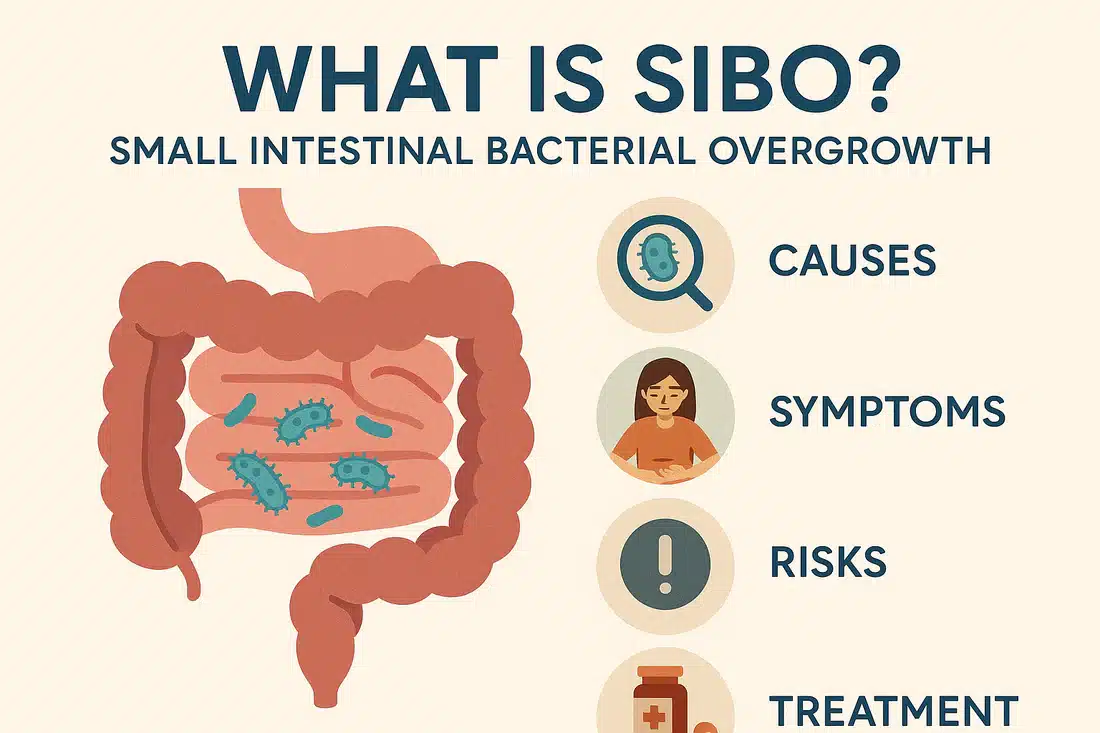
If you struggle with bloating, gas, constipation, diarrhea, reflux, or brain fog, you may have heard the term SIBO. SIBO, or Small Intestinal Bacterial Overgrowth, is increasingly recognized as a common cause of chronic digestive symptoms and may contribute to a variety of health concerns throughout the body.
Many people suffer for years before receiving a diagnosis, often being told they simply have IBS. While IBS is a collection of symptoms, SIBO may be one of the underlying causes.
SIBO stands for Small Intestinal Bacterial Overgrowth.
Normally, most bacteria live in the large intestine (colon), where they play important roles in digestion, immune function, and overall health. In people with SIBO, excessive bacteria migrate into the small intestine, where they begin fermenting food before it can be properly digested and absorbed.
As these bacteria feed on carbohydrates and fiber, they produce gases that can lead to bloating, abdominal discomfort, and changes in bowel habits.
SIBO typically develops when the body’s natural mechanisms for controlling bacterial growth become impaired.
Common causes and contributing factors include:
The small intestine has a cleansing mechanism called the Migrating Motor Complex (MMC), which helps move food particles and bacteria through the digestive tract between meals. When this process slows down, bacteria can accumulate and overgrow.
Certain bacterial infections can damage the nerves responsible for gut motility, increasing the risk of developing SIBO months or even years later.
When stool remains in the digestive tract for prolonged periods, bacteria have more opportunity to multiply and migrate into the small intestine.
Previous surgeries, scar tissue, strictures, diverticula, and anatomical changes may create areas where bacteria can become trapped and multiply.
Stomach acid serves as one of the body’s first lines of defense against unwanted bacterial growth. Long-term use of acid-suppressing medications may increase SIBO risk in some individuals.
SIBO is more common in individuals with:
Symptoms can vary significantly from person to person depending on the type of gas being produced and the severity of overgrowth.
Common symptoms include:
Because SIBO can interfere with nutrient absorption and increase inflammation, symptoms may extend beyond the digestive tract.
These may include:
Many individuals notice that their abdomen is relatively flat in the morning but becomes increasingly distended throughout the day.
Typically associated with:
Typically associated with:
May be associated with:
When left untreated, SIBO may contribute to long-term digestive dysfunction and nutritional deficiencies.
Potential risks include:
SIBO may impair absorption of:
Bacterial overgrowth may contribute to increased intestinal permeability (“leaky gut”) and ongoing immune activation.
Some individuals experience unintended weight loss due to poor nutrient absorption, while others may struggle with weight gain due to metabolic disruption and inflammation.
Chronic bloating, discomfort, fatigue, and food sensitivities can significantly affect daily functioning and emotional well-being.
The most common test is a lactulose or glucose breath test.
During testing, the patient drinks a sugar solution and breath samples are collected over several hours. The test measures hydrogen and methane gas production to identify bacterial overgrowth patterns.
Testing helps determine:
Successful treatment typically involves addressing both the bacterial overgrowth and the underlying cause.
Treatment may include:
Addressing slow motility is one of the most important components of preventing recurrence.
Strategies may include:
Patients may benefit from:
Depending on the individual, treatment may include:
One of the most frustrating aspects of SIBO is recurrence.
Many individuals successfully reduce bacterial overgrowth but do not address the underlying reason it developed. If the root cause remains, symptoms often return.
Common reasons for recurrence include:
While reducing bacterial overgrowth is important, long-term success often requires identifying and addressing the factors that allowed SIBO to develop in the first place.
At Whole Brain Holistic Care, we take a comprehensive approach by evaluating digestive health, nutrition, inflammation, immune function, lifestyle factors, and potential root causes that may be contributing to ongoing symptoms.
SIBO is more than just bloating. It is a complex digestive condition that can affect nutrient absorption, energy levels, mood, cognitive function, and overall health.
If you experience persistent bloating, excessive gas, constipation, diarrhea, reflux, brain fog, or unexplained digestive symptoms, SIBO may be worth investigating. Proper testing, individualized treatment, and addressing the root cause can help many people achieve meaningful and lasting improvement.